Crops need three key nutrients to grow……

Crops need three key nutrients to grow……

Lorem ipsum dolor sit amet, consectetuer adipiscing elit. Aenean commodo ligula eget dolor. Aenean massa.

Introduction:
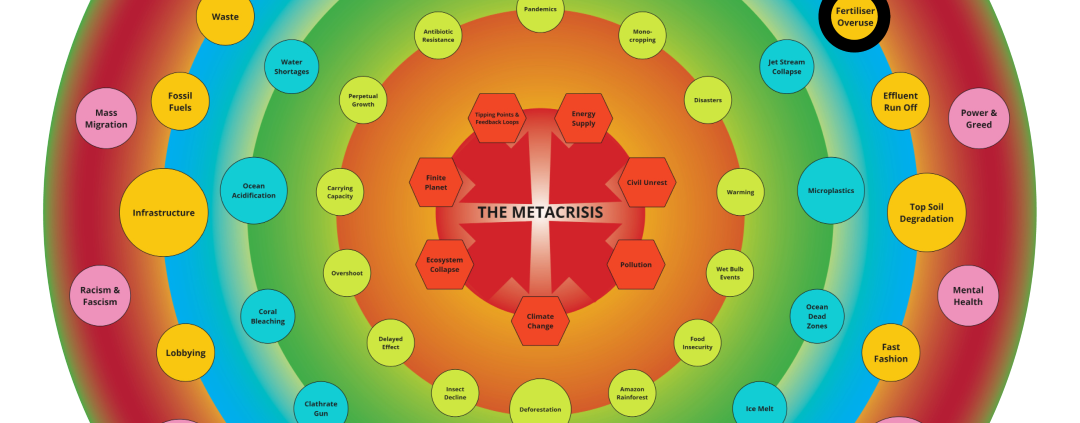
Technology is often celebrated as a force for progress, innovation, and human development. However, as the global crises of our time deepen, it’s becoming clear that technology plays a dual role in the meta crisis. On one hand, it has contributed to many of the challenges we face today, from job displacement to environmental degradation. On the other hand, it holds the potential to provide solutions that could help us navigate through these turbulent times. So, is technology part of the problem, or could it be our way out of the meta crisis?
Technological Disruption:
One of the most visible ways technology has contributed to the meta crisis is through technological disruption. Automation, artificial intelligence (AI), and digital transformation have revolutionized industries, but they have also displaced millions of workers worldwide. As jobs disappear, social inequality widens, fueling unrest and political polarization. Furthermore, the rise of digital platforms has enabled the spread of misinformation, weakening trust in institutions and creating echo chambers that amplify divisions in society.
For example, while AI has the potential to enhance productivity and solve complex problems, its misuse—such as deepfakes, algorithmic biases, and data privacy violations—has already exacerbated societal tensions. This illustrates how technology, when unchecked, can contribute to the very crises it is supposed to solve.
Environmental Impact:
Technology’s role in the environmental crisis is another major concern. The production and disposal of electronic devices contribute to e-waste, while data centers, which power the internet and cloud computing, have massive carbon footprints. The tech industry is often hailed as innovative, but its environmental costs are often overlooked. Smartphones, laptops, and servers all require rare earth metals, whose extraction leads to environmental destruction and exploitation of vulnerable communities.
Technology’s role in the environmental crisis is another major concern.
However, technology can also help mitigate these environmental impacts. Innovations in renewable energy—like solar, wind, and geothermal technologies—are paving the way for a future where energy can be generated without harming the planet. Similarly, advancements in energy-efficient computing and AI systems designed to optimize resource use show promise for reducing the environmental costs of technology.
Potential Solutions:
While technology has certainly contributed to the meta crisis, it also offers potential solutions. Green tech and cleantech innovations can reduce carbon emissions, while AI-powered models are helping scientists predict and mitigate the effects of climate change. Technologies like blockchain are being explored for use in transparent, fair, and efficient global systems, potentially transforming governance, financial systems, and supply chains in ways that promote sustainability.
For example, precision agriculture, which uses AI and IoT devices to optimize farming practices, can reduce waste and increase food production while minimizing environmental damage. Similarly, the development of lab-grown meats and plant-based alternatives could reduce the strain on agricultural resources and lower greenhouse gas emissions.
Conclusion:
Technology is neither inherently good nor bad; it is a tool that can be used to both exacerbate and solve the meta crisis. Its impact depends on how we choose to develop and apply it. Moving forward, the challenge is to harness technology responsibly, ensuring that innovations are guided by ethical principles and sustainability goals. As we navigate the meta crisis, we must be conscious of the dual nature of technology, ensuring that it becomes part of the solution rather than a deepening factor in our global challenges.