Fertilisers & The Oceans
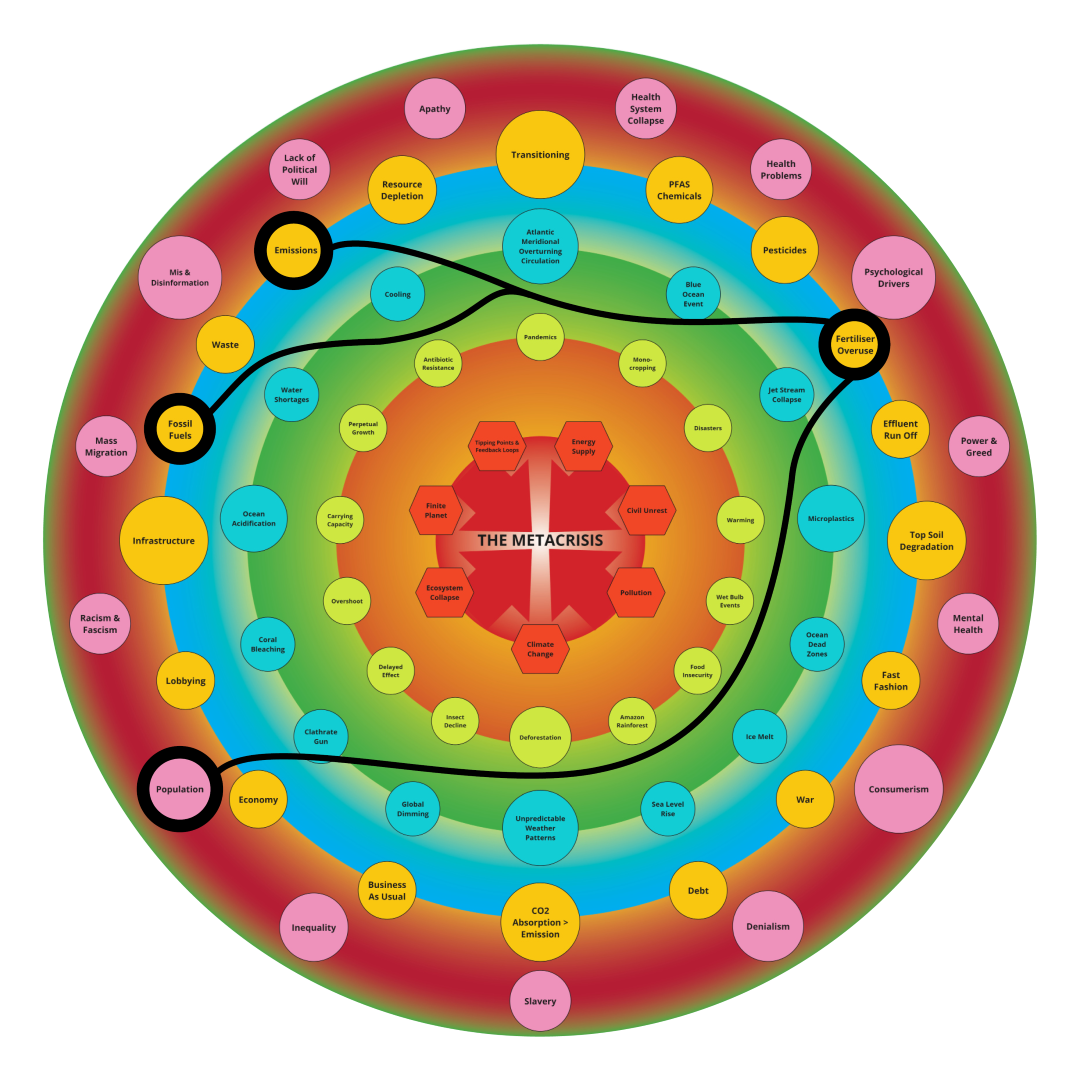
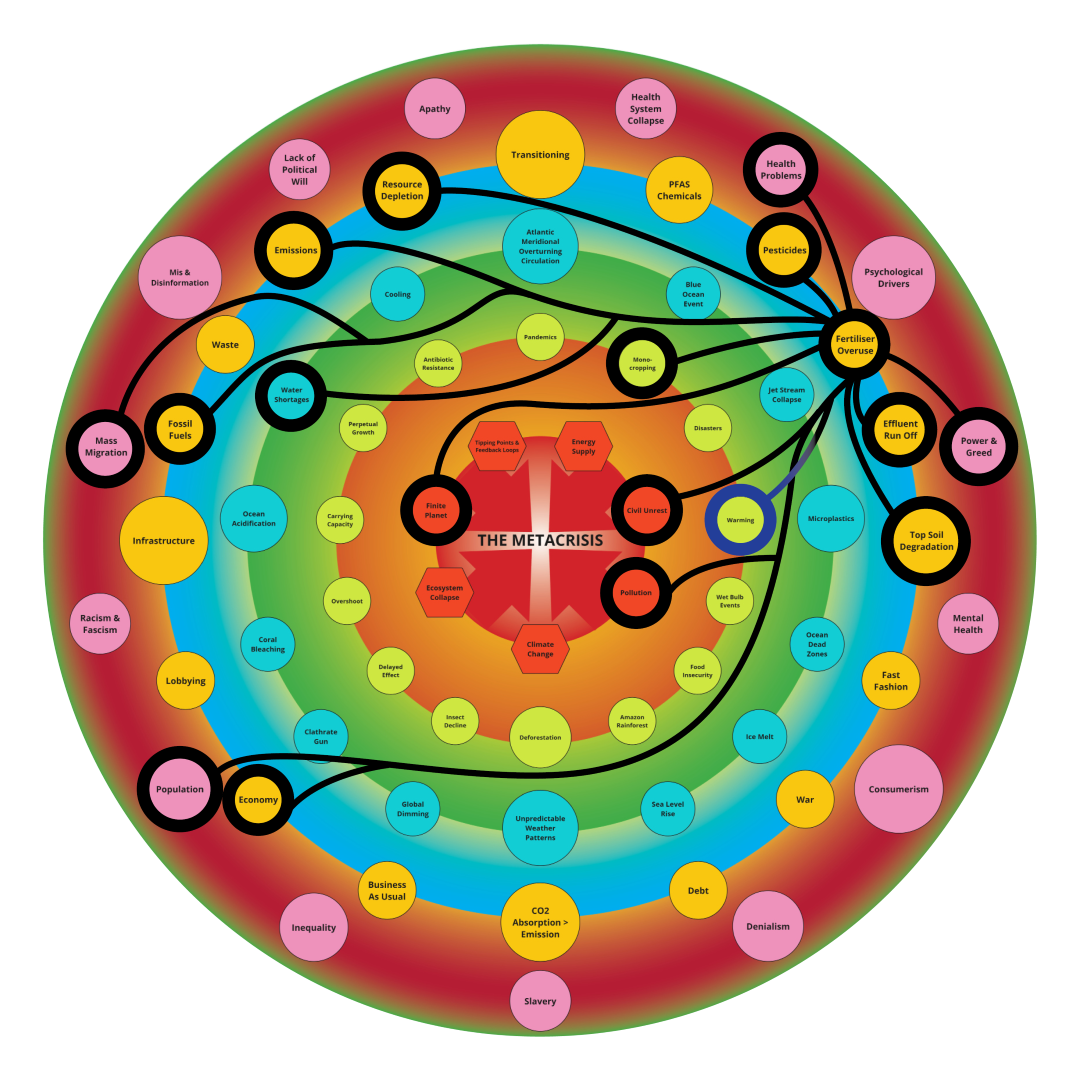
First, let’s start by highlighting
Fertiliser Overuse.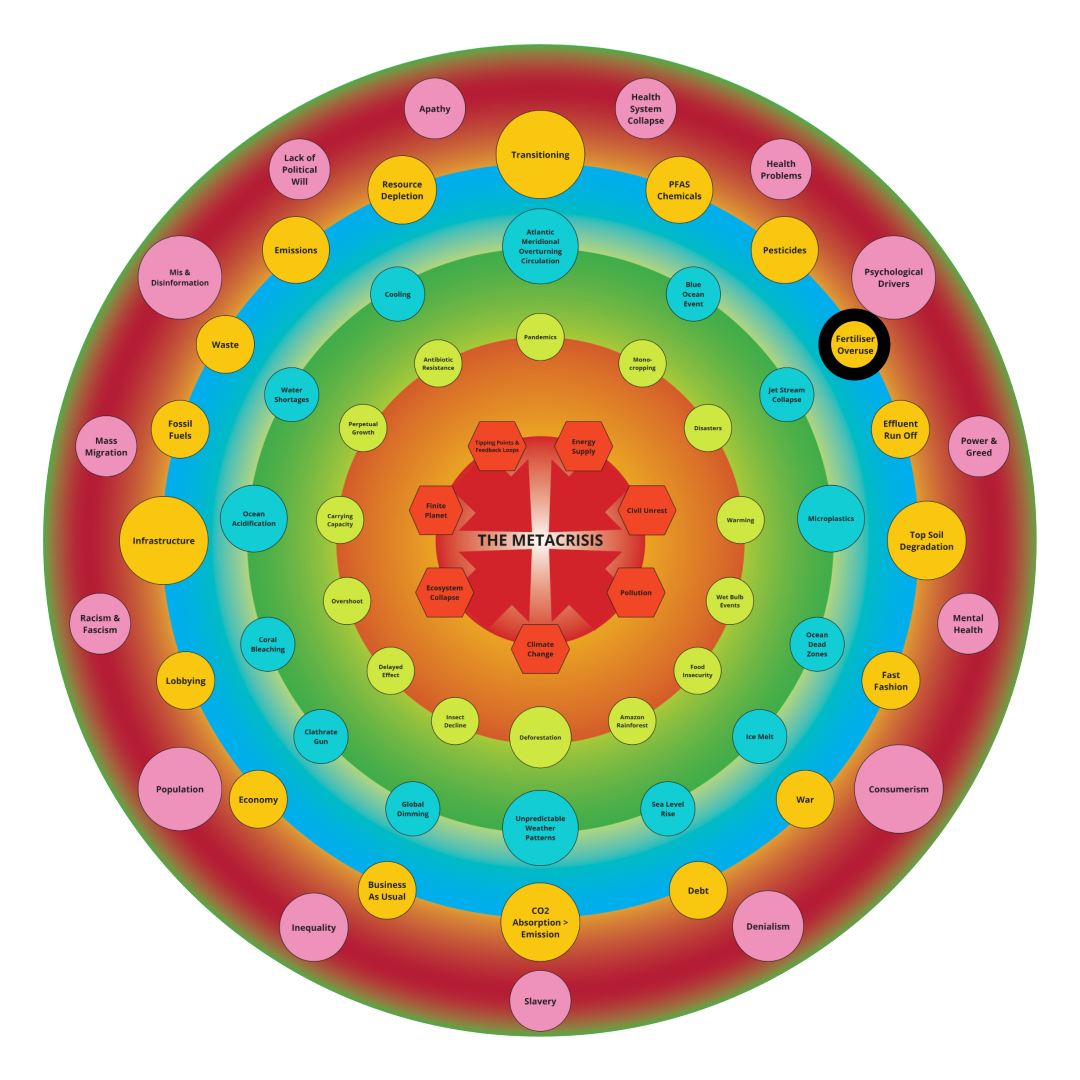
Crops need three key nutrients to grow:
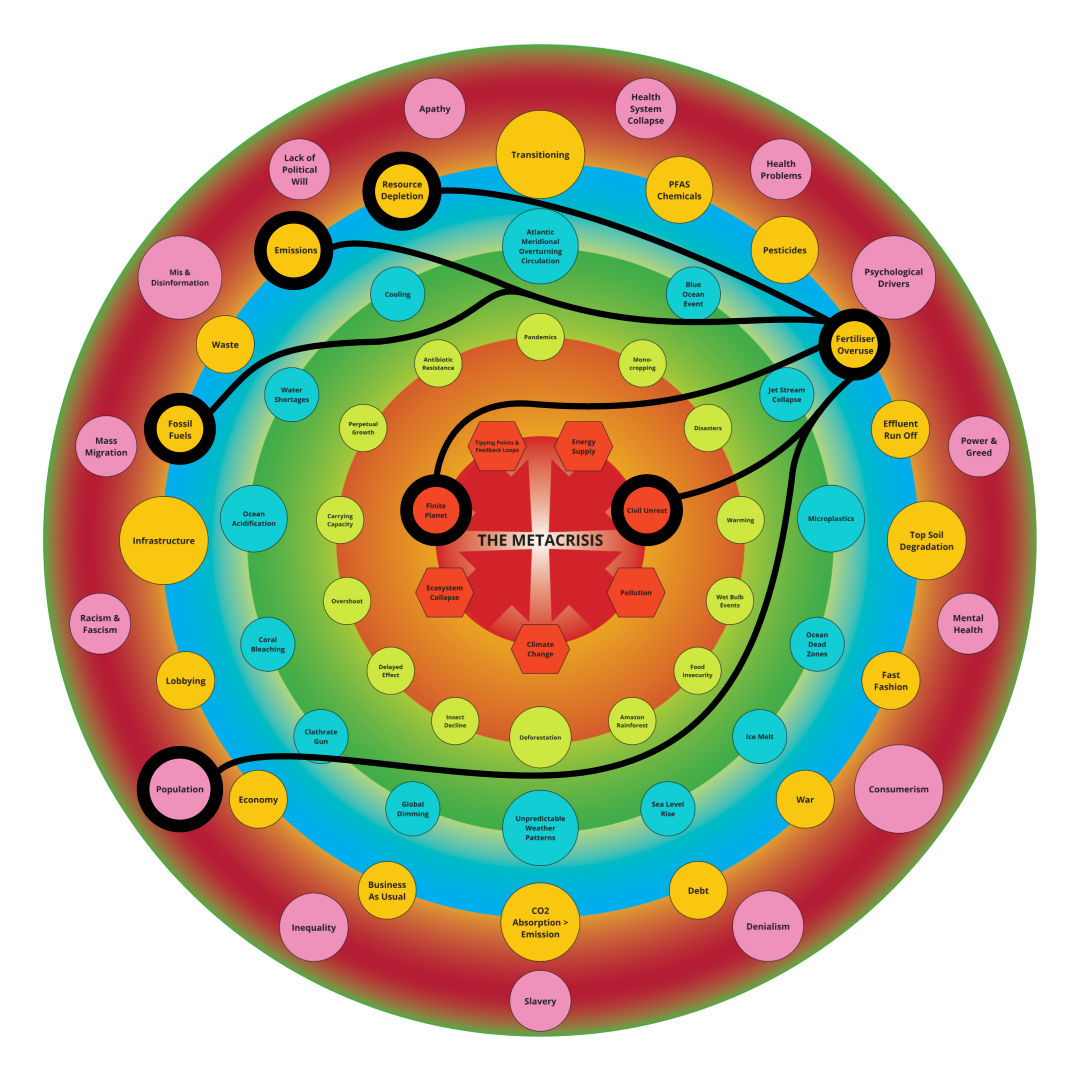
Somewhere near the beginning of the Twentieth Century, Fritz Haber and Carl Bosch discovered the process of synthesising Nitrogen out of the air. Utilising some good old fashioned energy, the process spits out ammonia and emissions. About 80% of the ammonia is used for fertilisers, and it is estimated that the Haber-bosch process produces more CO2 than any other chemical-making reaction. Without the discovery of this process, the global population would likely only be between 2-4 billion today.Nitrogen:
This is an essential element to life on earth. Every cell requires it, it is a vital ingredient in plant growth, and an invaluable link in our agricultural models. Most of the best reserves are gone, and those that remain are in just a handful of countries. The United States and Russia each have about 2% of global phosphorus stocks, China has 5% (estimated to last about 35 years at their current rate of consumption), and Morocco has 70%.Phosphorus:
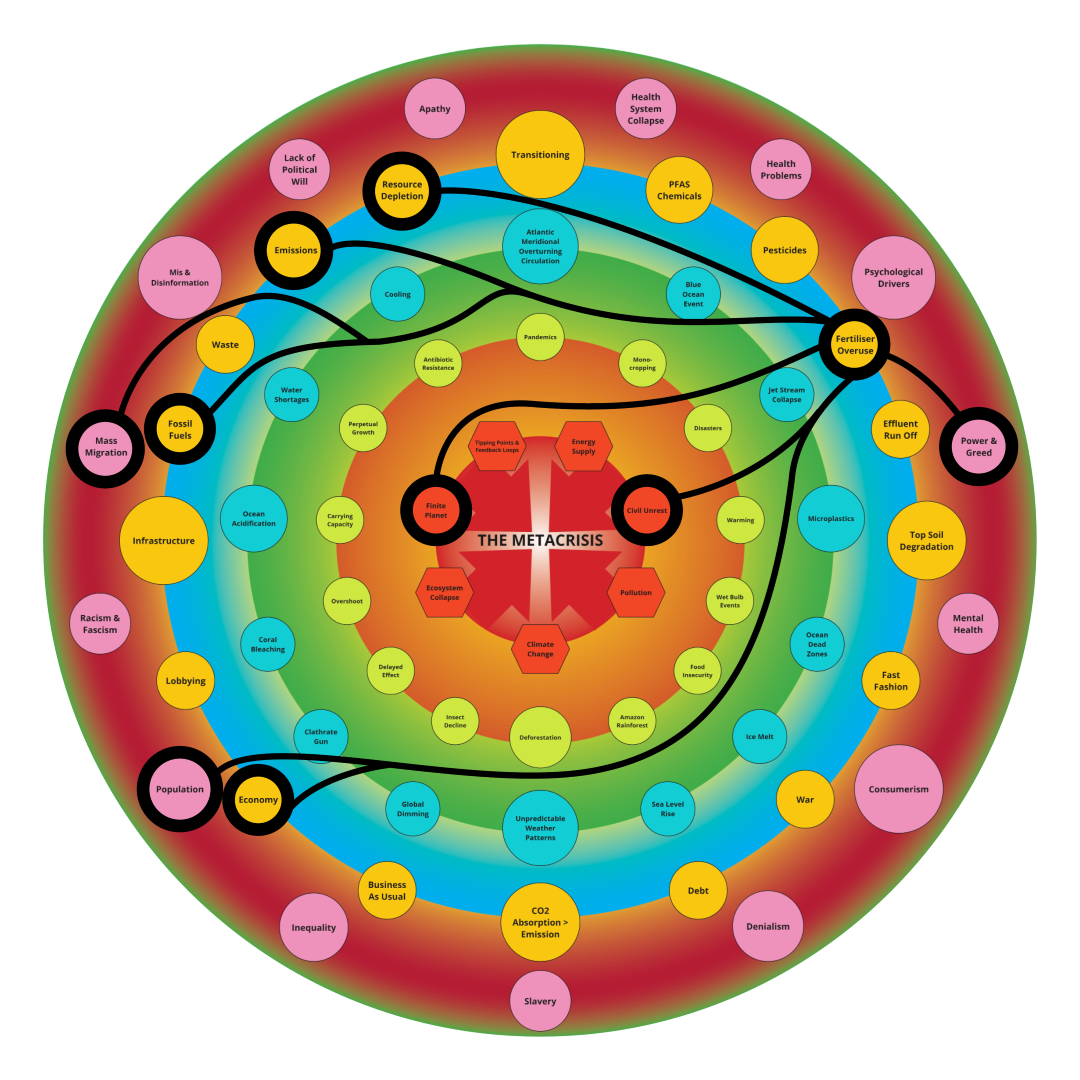
Morocco seized Western Sahara in the 70s, displacing tens of thousands of people who are still refugees today. In doing so they gained monopoly of phosphorus mines.
This is an essential macronutrient for plant growth and development. Mining activities cause severe damage to the surrounding environment, and there are myriad social, and economic problems associated with both active and abandoned mines, including the salinization of lands and freshwater ecosystems. Potassium can contaminate water and soil, and global supply is readily affected by political or global unrest.Potassium:
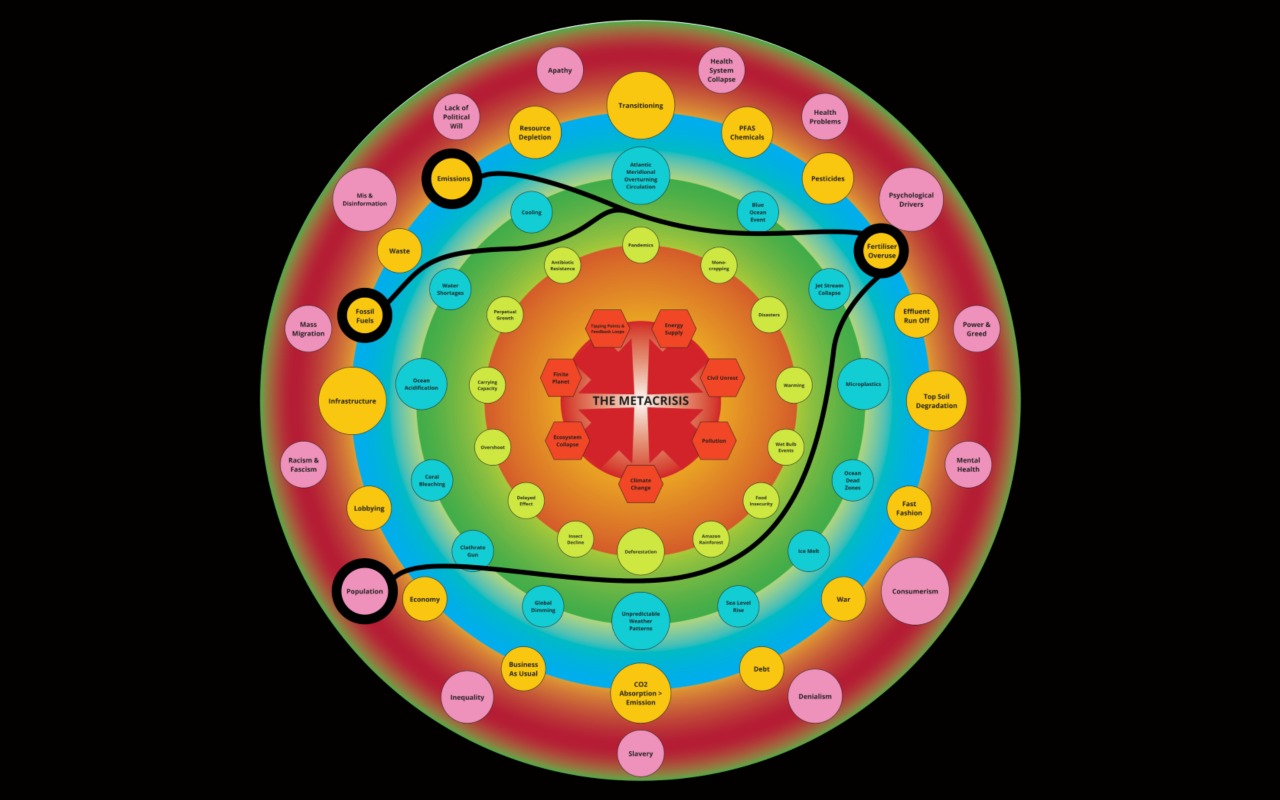
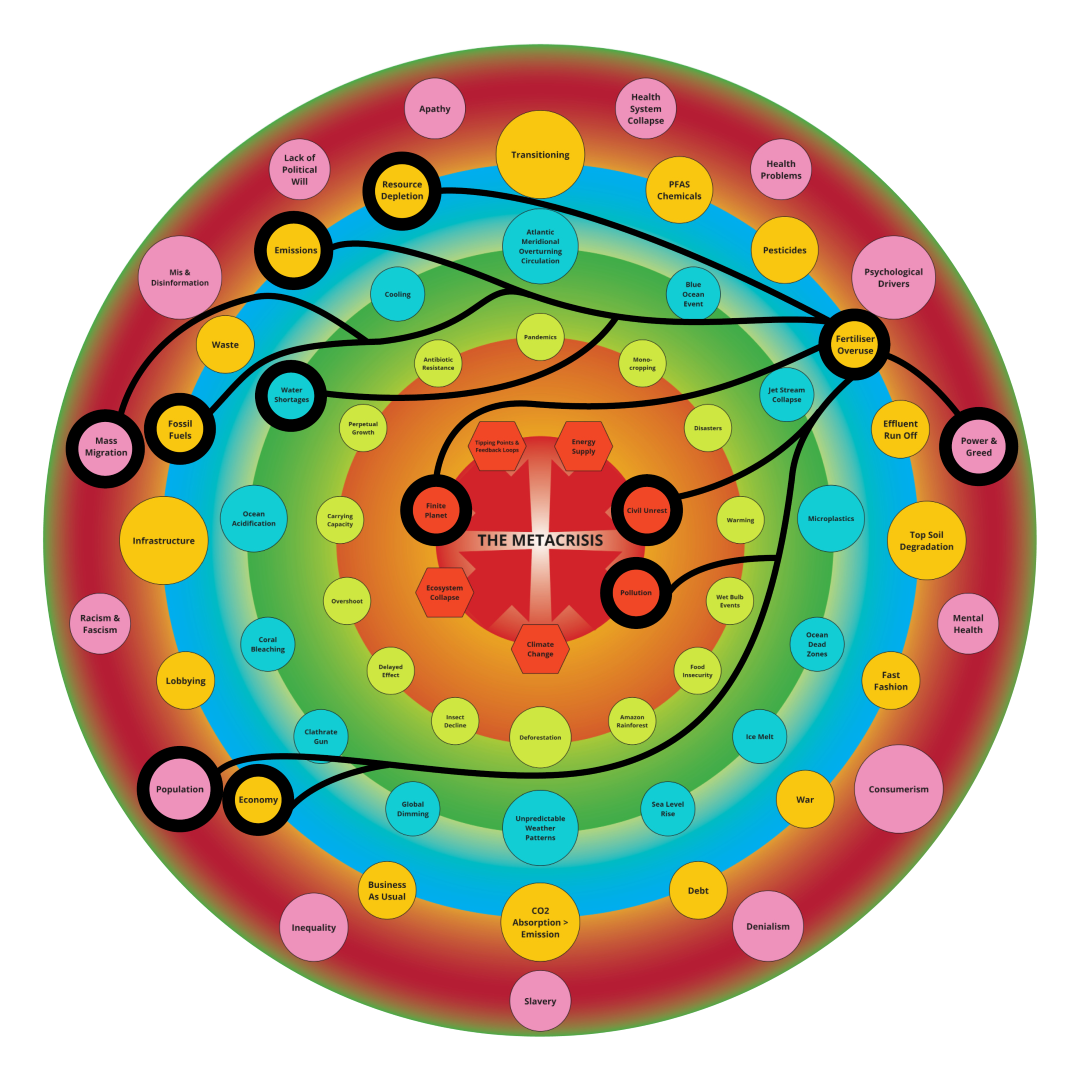
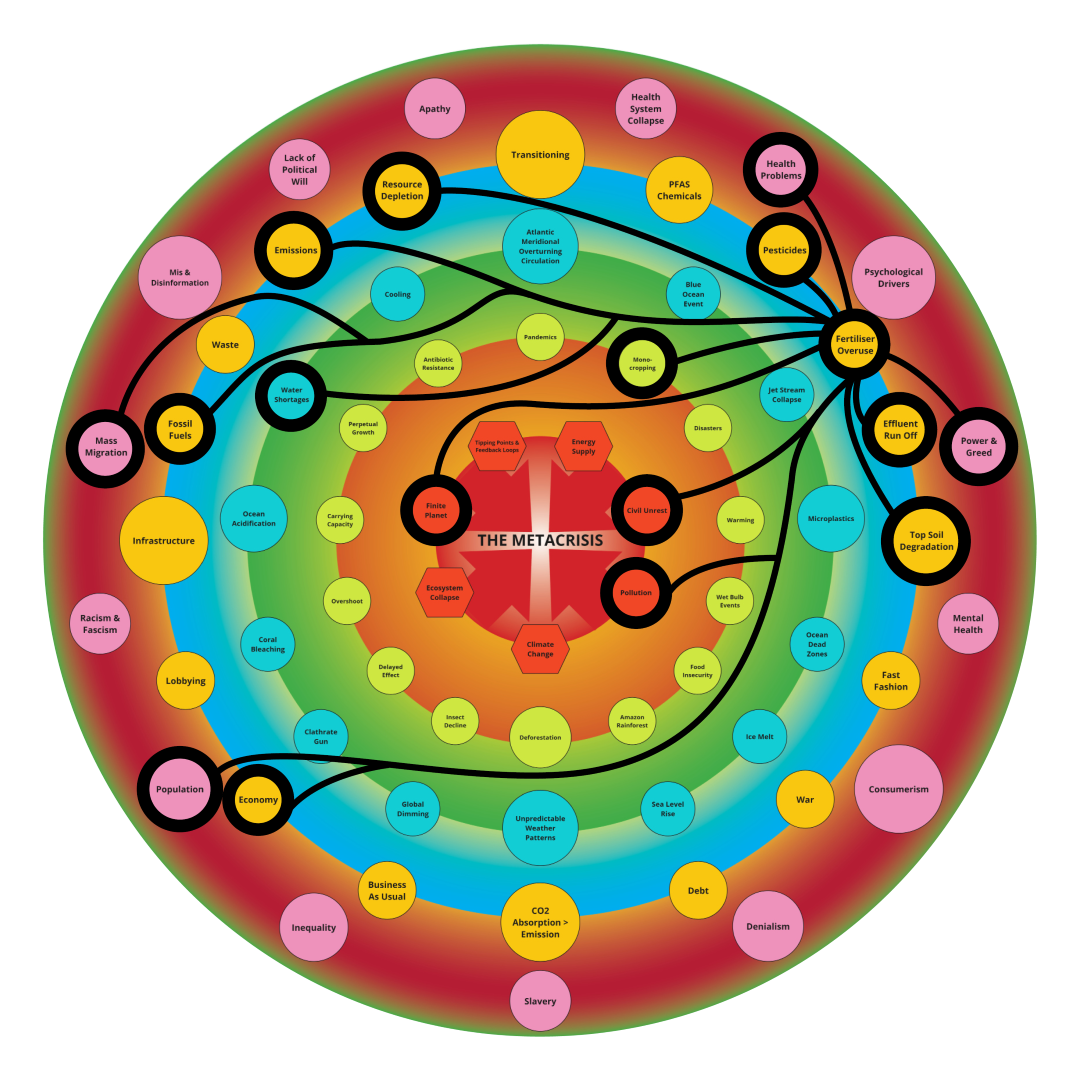
Our global agricultural models are built around monocropping and tilling. They require generous quantities of the aforementioned fertilisers, unfortunately the natural environment is unable to absorb the quantity that is applied. In combination with effluent runoff from cattle, pigs or other farm animals, excess nutrients and fertilisers are washed into waterways. Nitrate levels of 1mg/L increase the risk of bowel cancer, and here in New Zealand, our standards allow 11.3mg/L. 60% of tested water in New Zealand is dangerously contaminated, affecting an estimated 800,000 people.Agricultural Models:
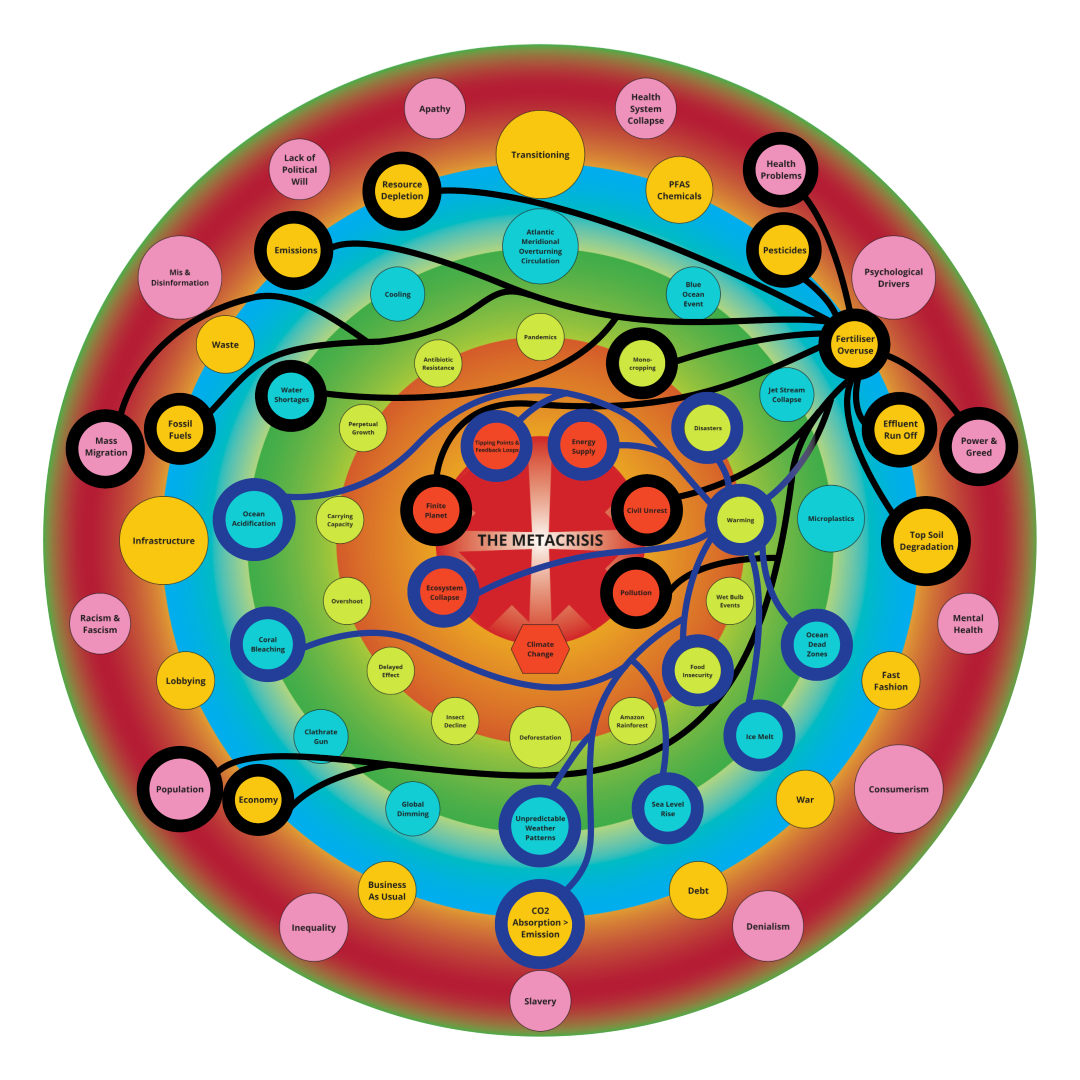
Warm water holds less oxygen, and absorbs less carbon dioxide. The oceans have already increased their acidity as a result of absorbing CO2, and are estimated to be almost 30% more acidic than pre-industrial revolution measurements, which is bad news for wildlife, dissolving shells and skeletons, and making it harder to survive larval growth stages.Agriculture meet Warming Oceans :
Ocean Acidification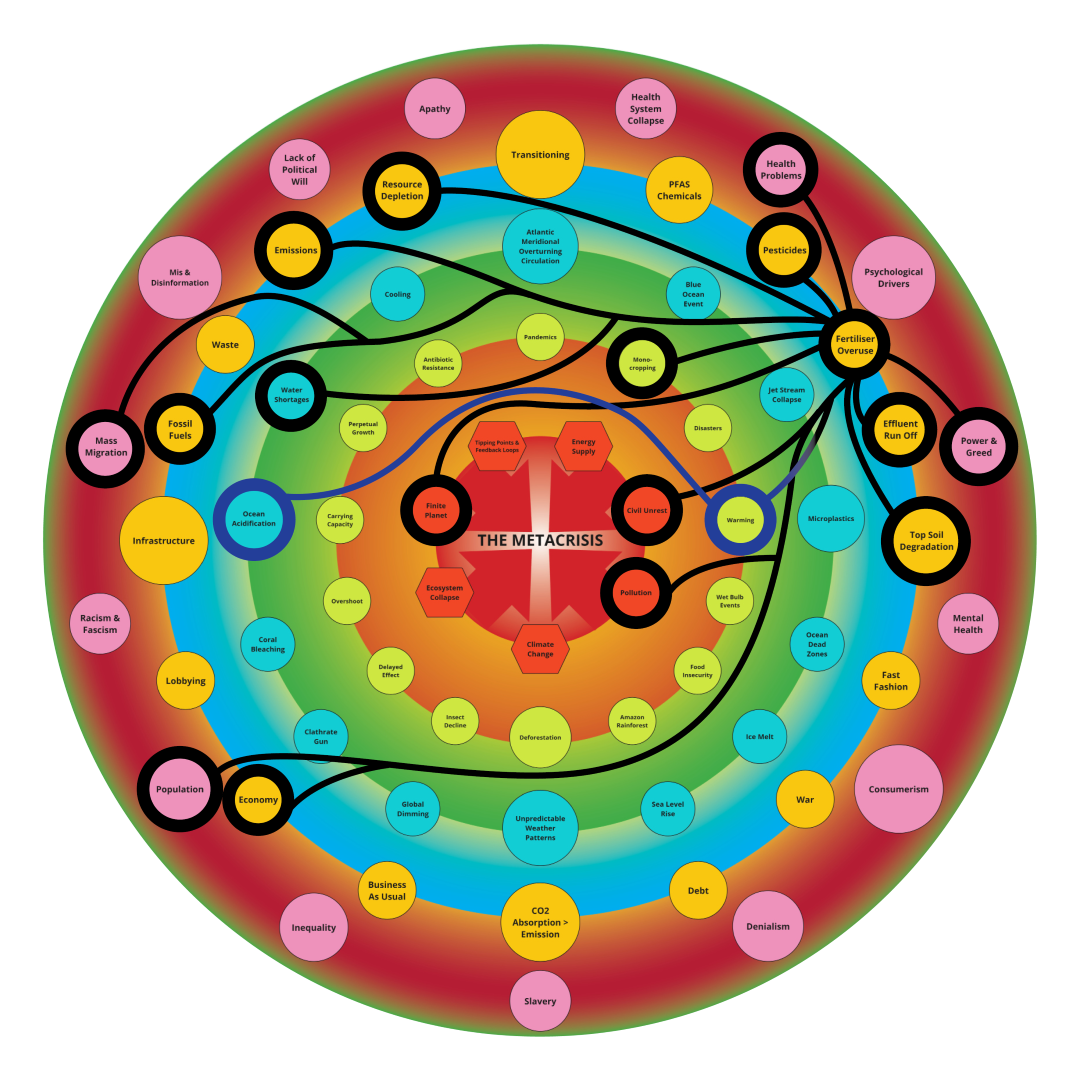
Ocean water around the world is already warming, and the addition of the nutrients and fertilisers that runoff, only exacerbates the problem.
As these nutrients wash out to sea and saturate the environment (eutrophication), they create algae blooms.
The warm water in combination with extra nutrients provides perfect conditions for explosive growth of algae. The algae grows, blocking sunlight and oxygen from reaching the underlayers of the water, then when the environment can no longer sustain the algae growth, the algae begins to die. The decomposition of the algae uses up the remaining oxygen, creating hypoxic zones or “Ocean Dead Zones”, and producing methane.
The result is entire areas which cannot sustain any life. There are between 400-500 of these zones, and collectively they are just a little smaller than New Zealand.
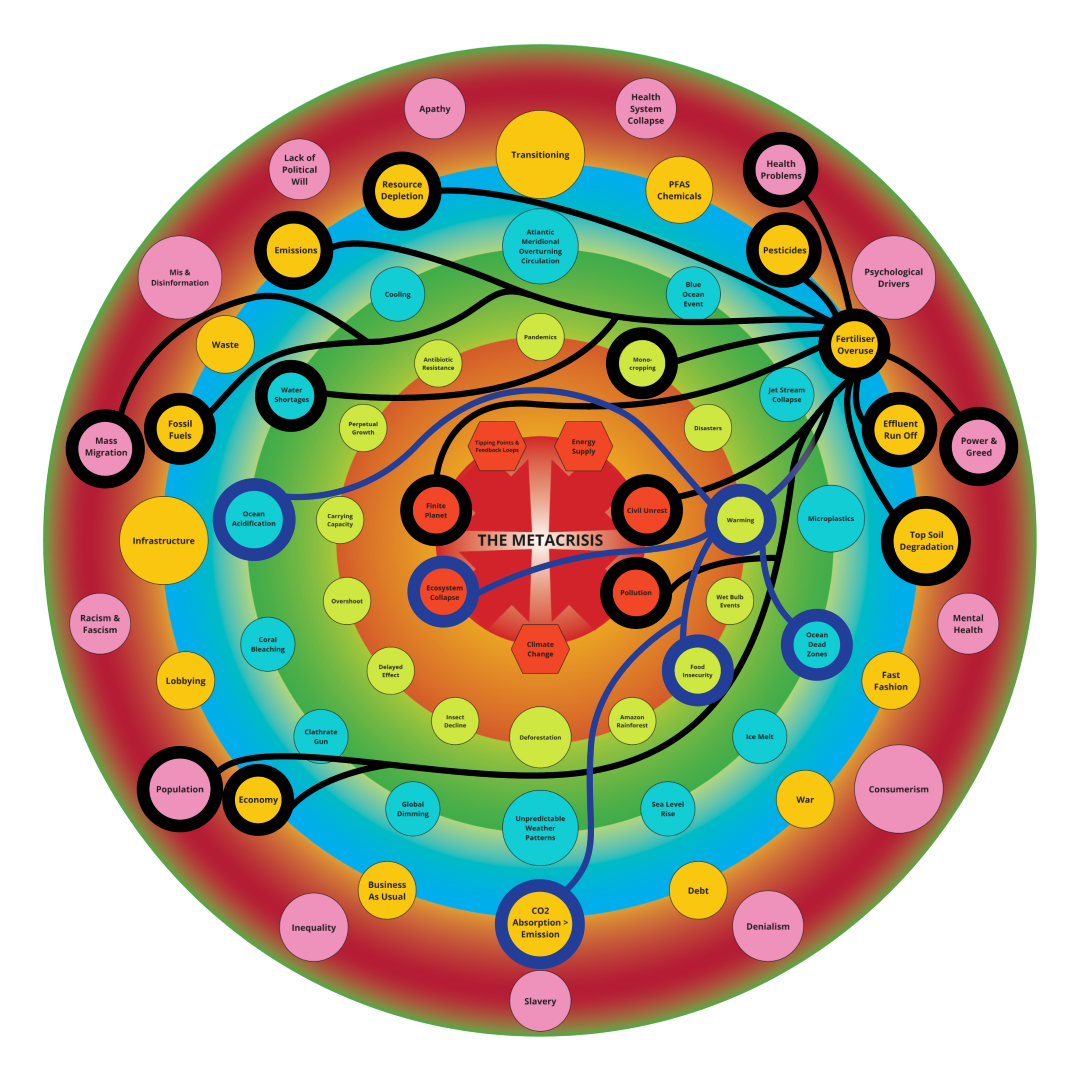
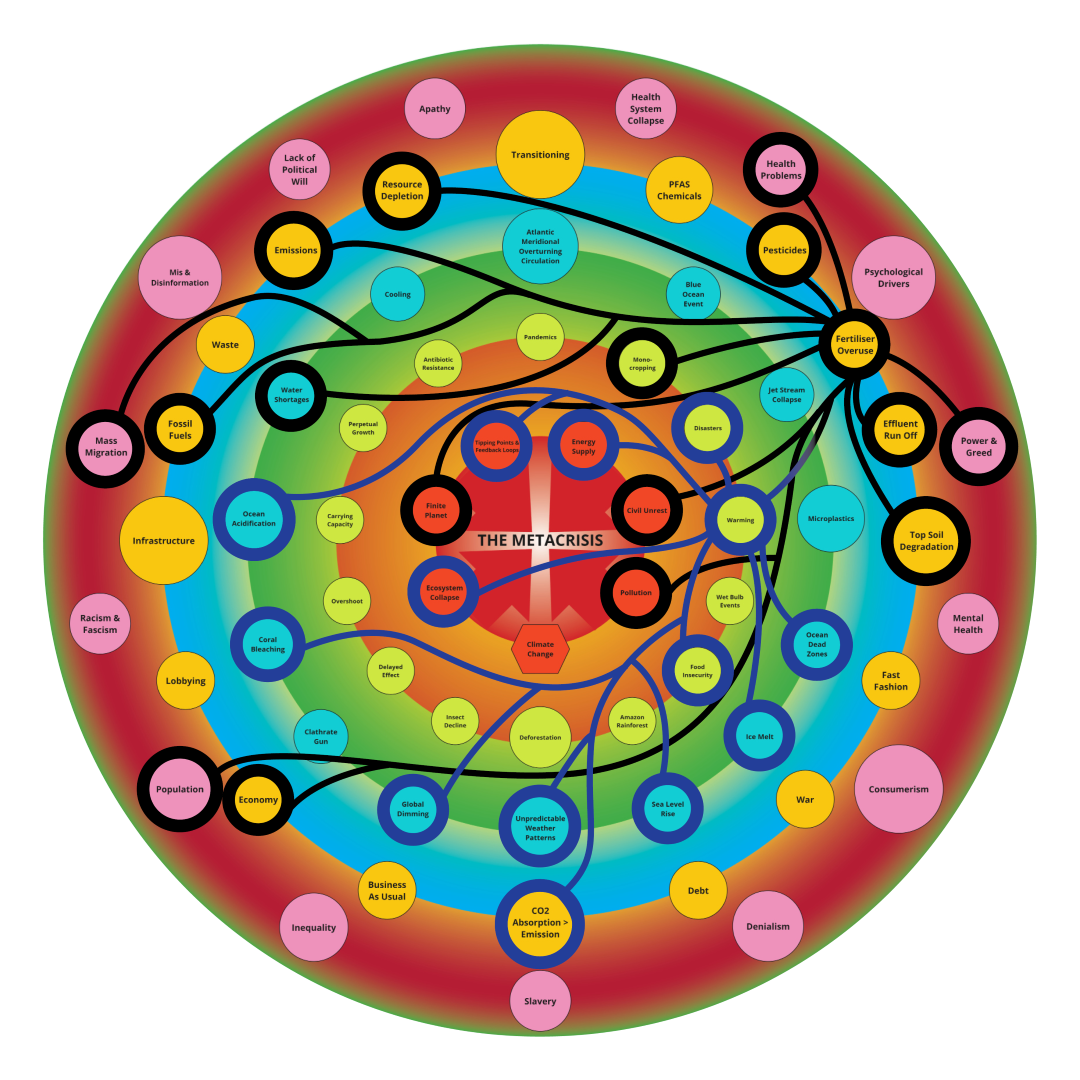
The increased energy in the warm water increases the frequency and severity of coral bleaching events.
In 2022, Fiordland experienced a bleaching which affected an estimated 50 million sponges, and saw almost 50% perish.
This is the largest bleaching event of sponges ever recorded globally. Sponges are a vital component in the ecosystem, providing habitat for other life, absorbing carbon, and are a crucial link in the food chain.
In addition to already warmer water (4.4°C warmer), drought conditions and low rainfall meant the water was clearer, allowing more light to reach the sponges and drive further warming.
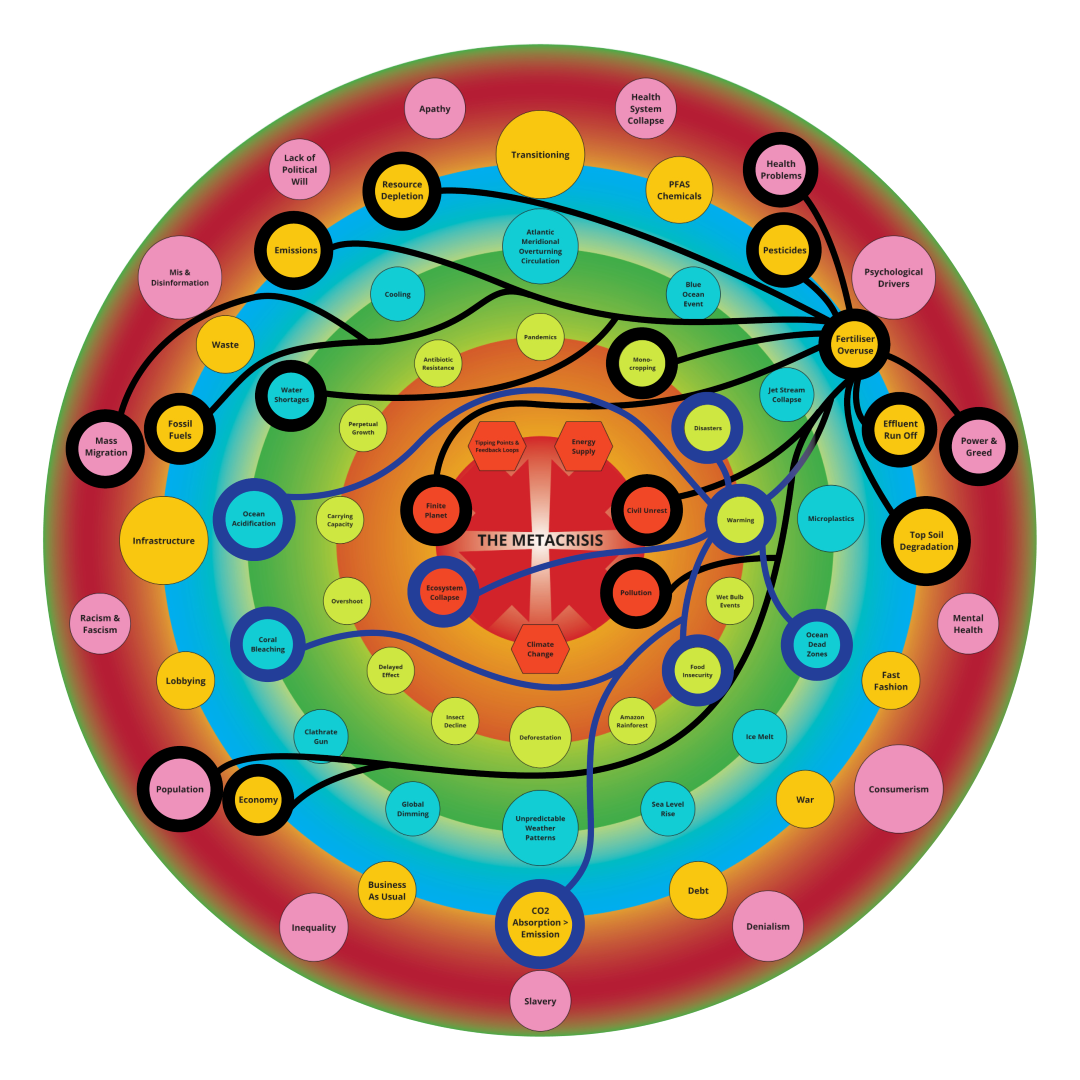
The Great Barrier Reef experienced its worst bleaching on record between 2023-24.
Loss of reefs also means less resilience against severe storms, which is a pickle, because warm water has more energy, so it generates storms faster, more frequently, and with more intensity, and it has thermal expansion which leads to increasing sea level rise.
New Zealand waters are warming 3-4x more than the global average.
China cut aerosol emissions by 70% over the past decade, which has led to a measurable increase in the temperature of their local water bodies, and is projected to cause warming by 0.2-0.5ˆC by 2030.
Our global food supply is dependent on agricultural models that rely on fertiliser to meet required production.
The way we grow our food is poisoning both the land and the sea.
Either we change the way we grow our food by removing fertilisers, causing mass starvations around the world, or we continue with Business As Usual and destroy the planet.Summary So Far:
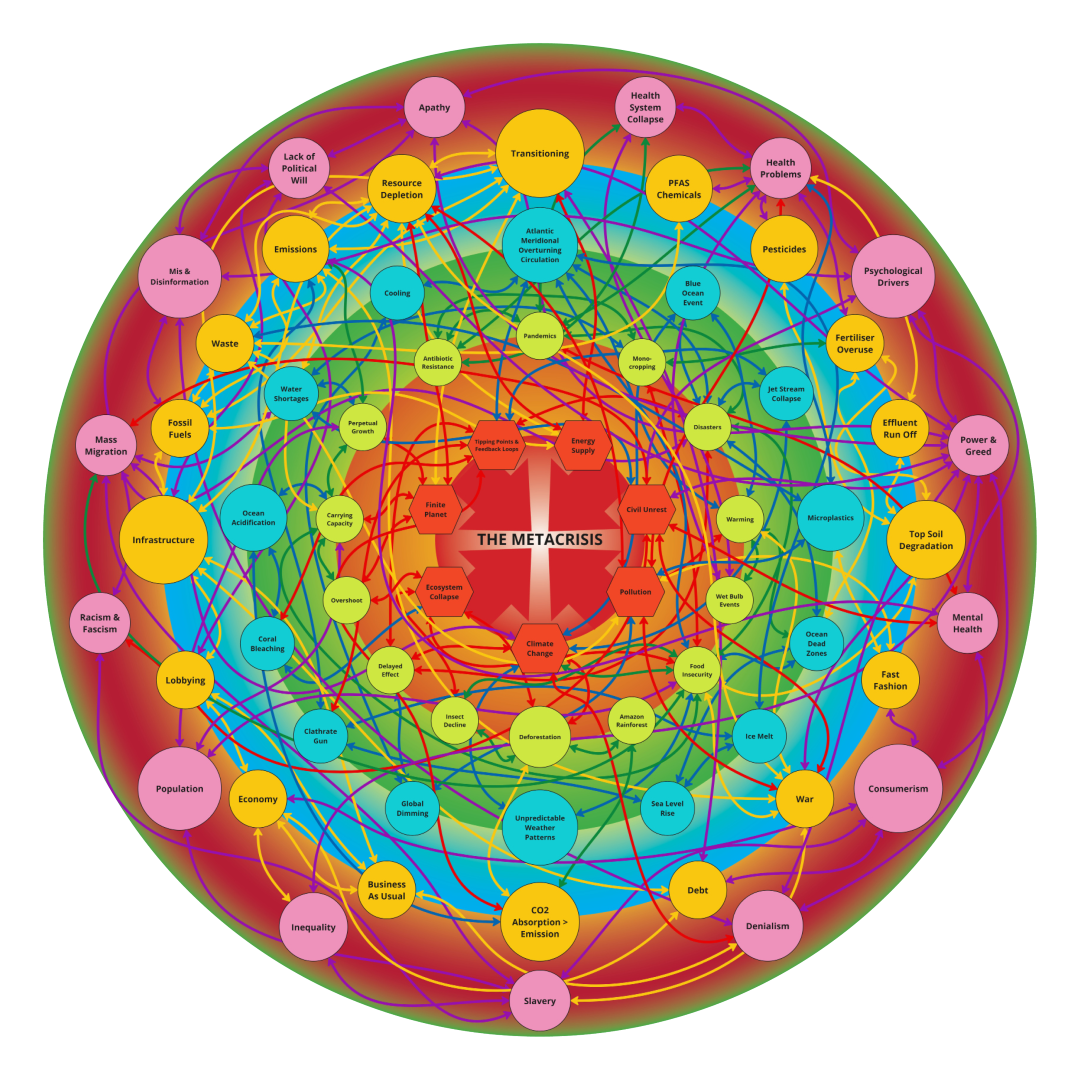
So Why Don’t We Change ?
Let’s highlight Psychological Drivers.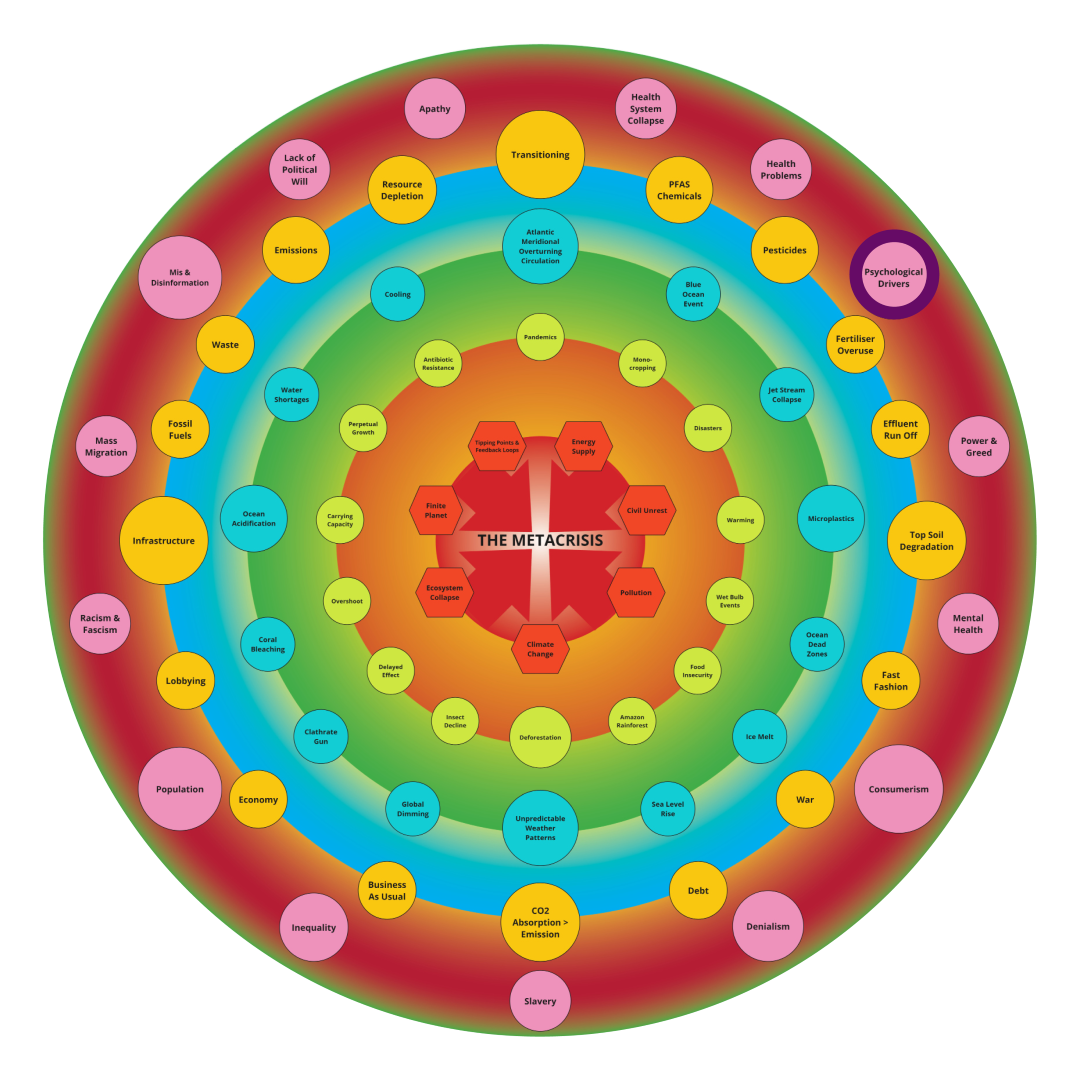
Fortunately there are brilliant people out there studying this, who are trying to understand why it is that humans are so bad at recognising long term problems, at making meaningful change.
What is it in human nature that continues to drive us down this path of self destruction?
To answer that question, let’s connect Fertiliser Overuse to Psychological Drivers and link the following back to that.
Now for the record, I’m not going to go in depth into these topics, I think that many of them are self explanatory, and that you all probably can see the way they play out in our society.Some recent Apathy: Title: Swiss voters reject biodiversity proposal in blow to conservation campaigners: Byline: "Plan aimed to expand protection of endangered ecosystems but opponents say it posed risk to business development.” More than 60% of voters rejected the plan
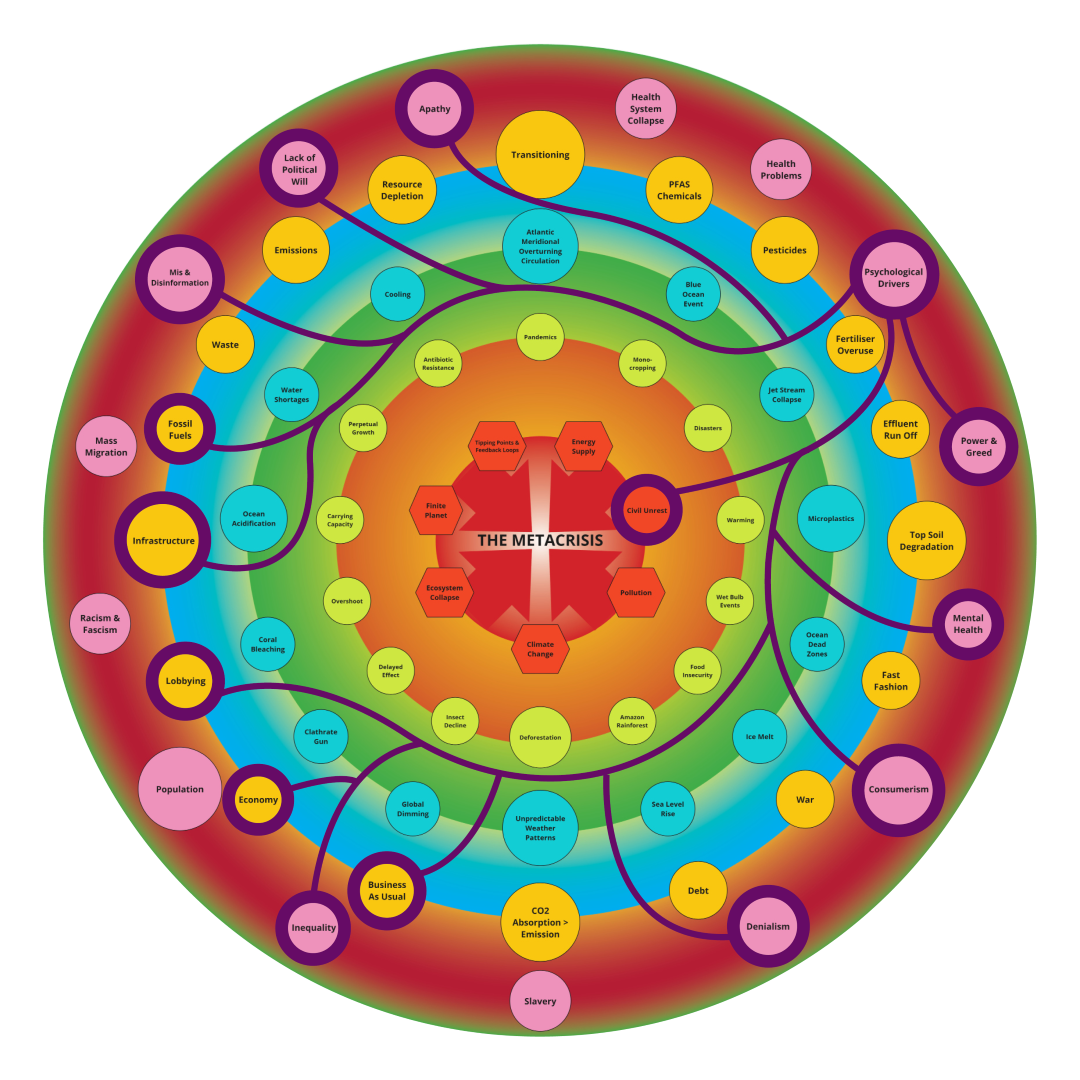
Power is concentrated in the hands of people who are not willing to relinquish it, as it’s their validation.
These are people like Trump, Putin, Kim Jong II, Viktor Orban, even locally we see it, not by such profound disregard for the welfare of people, but in the prioritising of economic profit over an environment that supports life, and by working to increase the divisions between us.
We desperately need to change that.Those who strive for power:
The left and right hemispheres of the brain perceive the world in quite different ways.
The left hemisphere gives a narrow focus which breaks the world up into little pieces of information.
It is analytical and logical, seeing events as isolated, lacking connections, and categorising items so they essentially become abstracted and lifeless.
Through the left hemisphere view, humans are separate from nature, and nature is merely a resource to be utilised.Hemispheres
L vs R
The right hemisphere on the other hand, sees that everything is ultimately connected, a whole, rather than the individual components.
It recognises the implicit nature of complex connections and how all those interactions weave into something greater than the separate parts.
Here humans are part of nature, and nature is something to be revered.Hemispheres
L vs R
We should be trying to save the world, the oceans, the forests, the wildlife, not because of economic drive, or for personal gain, but because these things are powerful, beautiful, rich, complex entities, that have value in and of themselves.Hemispheres
L vs R
We have to stop seeing them as only “resources” to be used.Hemispheres
L vs R
A good proportion of people who are drawn to power or money tend to be of the left hemisphere persuasion, and for the record, the left hemisphere’s interpretation of the world is not in and of itself inherently wrong. It becomes problematic when in combination with the dark triad of personality traits.
These are not the people who are best suited to making big decisions about our lives (meanwhile, those who might be better suited, don’t want a bar of it).Hemispheres
L vs R
The dark triad traits are:
a) Narcissism (self absorption)
b) Psychopathy/Sociopathy (lack of empathy for others and nature),
c) Machiavellianism (strategic exploitation with a willingness to manipulate others).
In combination with the left hemisphere, these traits culminate in prioritising the gains of individuals and companies over other people and the natural environment. Unfortunately it is estimated that about 12% of corporate senior leadership displays a range of psychopathic traits, and it isn't uncommon for people from this sphere of personality to be drawn to politics.Hemispheres
L vs R
The right hemisphere sees everything as connected, and yet ironically in our age of pseudo-new-age-spirituality, it often seems that there’s a disconnect between people inclined to this perception, and actually taking tangible steps to help make the world a better place.
There is a pervading opinion that all we have to do is change the way we think of and perceive the world, and we can make it a better place (and I’m sure there’s some truth to that, don’t get me wrong).
However this kind of spiritual escapism can prevent people from genuinely engaging with their emotions, from taking responsibility for their actions, and from engaging with the world in a meaningful way. Why not “think it”, and take physical steps to make it happen?
Each hemisphere’s perception on its own is incomplete, and gives only a distorted view of the world. Somehow we have to find a middle ground.Hemispheres
L vs R
“You’ve got a kind of mechanistic, reductionist world subtended by the left hemisphere, which is just a representation or a useful diagram, and you’ve got a living, complex world on the other hand, which has characteristics which are very much harder to pin down, that involve all the richness and meaning in life.”As Iain McGilchrist describes it:Hemispheres
L vs R